
Choosing types of insulation feels simple until comfort problems keep coming back. Drafts, moisture, and hot-cold rooms usually point to air leaks, not just low R-value. Additionally, small gaps around lights, attic hatches, plumbing, and rim joists can quietly drain comfort every day. Moreover, the “wrong” insulation in the wrong zone can trap moisture, reduce performance, and create repeat repairs. Consequently, you should treat insulation like a whole-home system instead of a single material choice. Therefore, you should match insulation to airflow control, moisture behaviour, and the exact areas that leak most.
Why “Air Control” Changes the Insulation Decision
Many homeowners focus only on thickness because it feels measurable and straightforward. However, insulation cannot perform at full value when air slips around it through cracks, seams, and penetrations. Consequently, warm air escapes in winter and hot air enters in summer, so your HVAC system runs longer while comfort still feels inconsistent. Additionally, moving air carries moisture, which can increase condensation risk in cooler zones like attic edges, rim joists, and crawl space surfaces. Because airflow drives both heat loss and moisture movement, the most effective types of insulation focus on sealing leaks first and insulating second, especially in high-pressure zones like attics and rim areas.
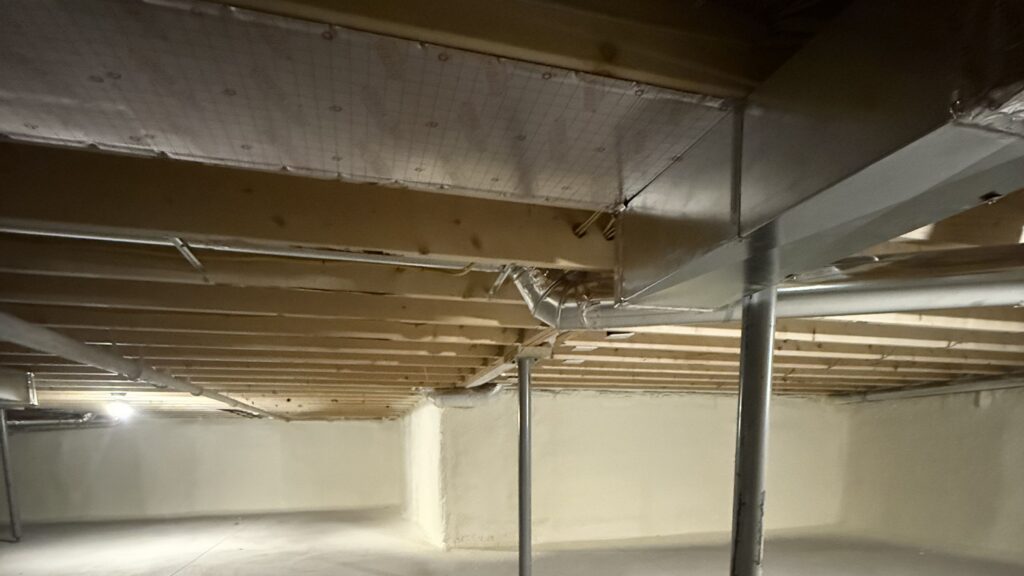
Spray foam solves this issue differently because it expands into gaps and adheres to surfaces as it cures. As a result, it creates a tighter boundary that reduces uncontrolled airflow while also delivering insulation value in the same step. Moreover, this sealed boundary helps limit moisture migration that rides along with air movement, so the building envelope stays more stable through seasonal swings.
Types of Insulation Explained: Which One Fits Your Home
Choosing insulation gets easier when you stop comparing brands and start comparing how insulation behaves. As a result, the right attic strategy determines whether different types of insulation deliver long-term comfort or continue to underperform despite added thickness.
1) Material Composition
Insulation materials usually fall into foam, fibre, or board categories. Foam options expand and fill gaps, so they often support strong air control.
- Foam insulation: It expands or sets in place, so it fills gaps and supports air sealing. Therefore, it fits areas where drafts and moisture movement cause comfort problems.
- Fibre insulation: It slows heat flow using trapped air, so installation quality matters most. However, gaps or compression can reduce performance quickly.
- Board insulation: It comes in rigid panels, so it can create a continuous thermal layer. Consequently, it reduces thermal bridging when seams and edges stay sealed.
2) Installation Method
Installation style affects coverage quality and long-term performance. Sprayed insulation bonds to surfaces and reaches irregular cavities.
- Sprayed: It adheres to surfaces and fills irregular spaces for consistent coverage. As a result, it can reduce leakage pathways while insulating.
- Blown: It spreads quickly over large areas or fills cavities, so it improves coverage efficiently. However, it needs proper depth and ventilation protection in attics.
- Placed: It lies in open areas in layers, so it works when access remains straightforward. Therefore, it performs best when installers avoid gaps and keep the thickness uniform.
- Fitted: It requires accurate cutting and tight contact with framing. Consequently, small installation errors can create voids that reduce real performance.

3) Performance Behaviour
Performance depends on more than R-value. Air-sealing ability determines how well insulation stops drafts and energy loss through leakage paths.
- Air-sealing ability: It controls drafts and reduces heat loss, making air control often more effective for comfort than just adding thickness.
- Moisture resistance: It controls humidity and condensation risk. Consequently, it protects attics and crawl spaces.
- Density: Higher density enhances durability, insulation stability, and improves performance in areas with airflow and pressure changes.
This framework helps you choose insulation with fewer mistakes and better results. Therefore, you should select the material, installation method, and performance behaviour together, so your insulation plan matches your home’s real comfort and moisture needs. Learn more about Home Insulation.
How Placement and Method Affect Performance
Attic insulation works differently from wall or crawl space insulation because heat rises and air pressure shifts throughout the year.
I) Attic floor insulation: Insulation sits on the attic floor while the attic stays ventilated. Therefore, it improves comfort without changing the ventilation design.
II) Roof deck insulation: Insulation goes under the roof deck, bringing the attic into a conditioned space. Consequently, it reduces air leaks and stabilises temperatures.
III) Hybrid attic systems: You seal key leaks first, then add insulation depth on the attic floor. As a result, comfort improves without a full system change.
IV) Vented attic setups: Soffit and ridge airflow control moisture. Thus, insulation must stay clear of ventilation paths.
V) Sealed or semi-sealed attics: Ventilation is reduced, or stops, and air sealing becomes critical. Therefore, insulation controls heat and moisture inside the envelope.
These attic approaches solve different problems, so the “best” choice depends on your home’s airflow and moisture patterns.
Common Mistakes That Reduce Insulation Performance
Insulation problems often come from execution errors, not bad materials, like:
- Gaps and voids allow air to bypass insulation, so even high R-value material underperforms.
- Compressed or uneven insulation loses effective thickness, which reduces real thermal resistance.
- Blocked ventilation paths trap moisture near roof decks and framing, increasing condensation risk.
When you avoid these mistakes and treat insulation as a system, performance becomes predictable, durable, and easier to maintain over time.
Conclusion
Choosing the right types of insulation requires more than comparing products or chasing higher R-values. When you evaluate types of insulation through air control, moisture behaviour, and attic placement, performance becomes predictable instead of trial-and-error. Seal Tech Insulation applies this system-first approach to help homeowners select types of insulation that actually solve drafts, humidity, and uneven comfort, not just cover symptoms. Additionally, this approach reduces callbacks, prevents seasonal moisture issues, and keeps indoor temperatures steadier across every room. As a result, upgrades feel measurable because comfort improves first, and energy waste drops next.